The Ultimate Guide to Choosing a Tree Service in Georgia (What to Look For and What to Avoid)
- Marsel Gareyev

- Sep 23, 2025
- 7 min read
If you’ve ever searched “tree service near me” after a storm rattled your gutters at 2 a.m., you already know: there are a lot of options in Georgia. Some are fantastic. Some are… a guy with a ladder and a chainsaw. When the work involves your roofline, power lines, and a 60-foot pine leaning a little too close to the garage, choosing the right crew isn’t just a nice-to-have—it’s safety, liability, and peace of mind.

This guide walks you through exactly how to pick a trustworthy tree service in Georgia—what to ask, what to expect, and what to avoid—so you can feel good about who’s on your property.
(Quick context: All For One Tree Service has been working in Douglasville and around West Georgia for 30+ years. We’ve seen the good, the bad, and the “I can’t believe they did that to a tree.” I’ll share a few stories along the way.)
Why the right tree service matters (way more than you think)
Tree work touches everything—your home, your insurance, your neighbors, and your safety. Poor pruning can weaken a tree for years. A bad removal can damage sewer lines, fences, or the side of your house. And if the company’s not insured? You could be on the hook.
A neighbor of mine once chose the cheapest quote after a summer storm. The crew showed up with no helmets, no ropes, and a pickup full of dull tools. They pinched the saw in a binding cut, panicked, and let a limb swing into the chimney. The “cheap” job turned into a new flue plus a masonry bill. Lesson learned: price only tells part of the story.
Start with the must-haves
1) Licensing, insurance, and real credentials
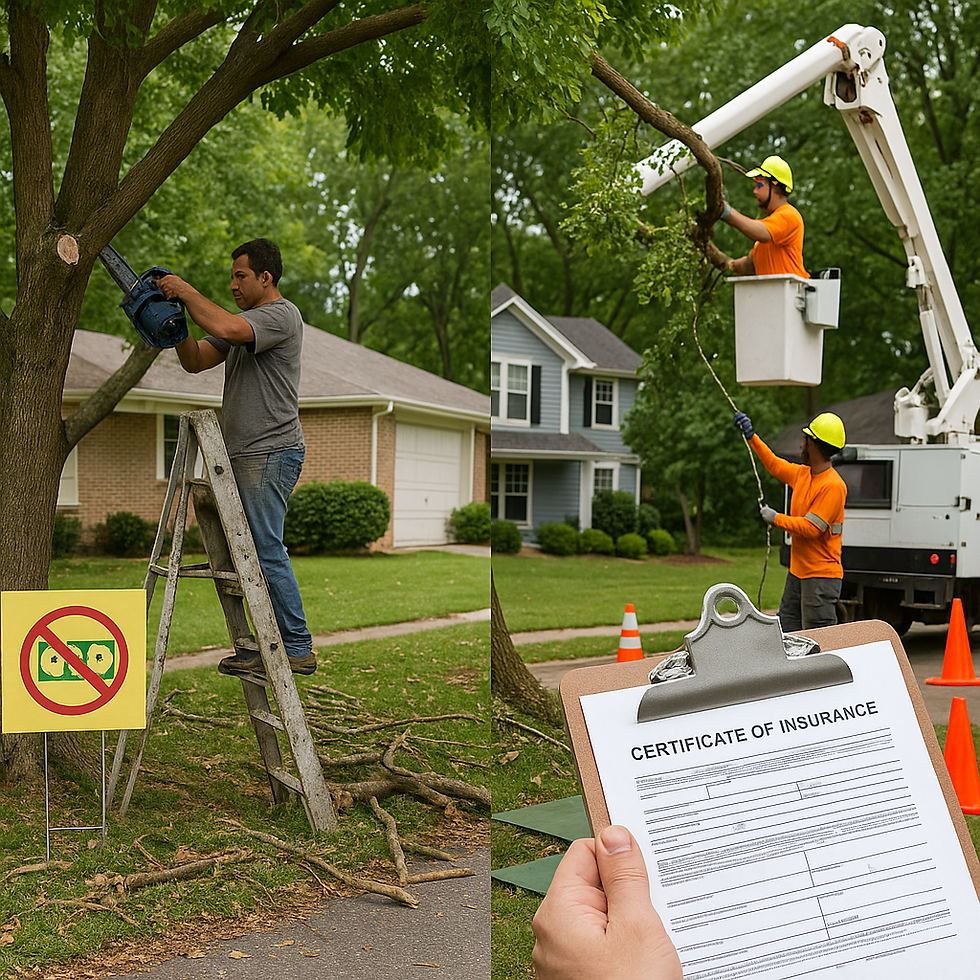
Ask for proof—every time. Reputable companies carry general liability and workers’ comp. Don’t take “yeah, we’re covered” as an answer; request a current certificate. If someone gets hurt or something gets damaged, you need that protection.
If you’re comparing options, check whether they have certified arborists involved. Tree biology matters. Knowing when to prune, how to reduce a canopy correctly, and how to read internal decay—those aren’t guesses.
Need a health check? See Tree Health & Inspection
Looking for corrective pruning? See Tree Pruning
2) Local roots (pun intended)
Georgia trees + Georgia weather = a specific skill set. Red clay soil, fast-moving storms, and species like loblolly pines, willow oaks, and Bradford pears each have their quirks. A local crew knows how those trees actually behave in a wind burst and where the hidden risks tend to show up.
3) In-person, written estimates
No one should price your job over the phone based on “send me a pic.” A good company will walk the site, point out hazards, explain options, and give you a written estimate that lists scope, equipment, cleanup, and haul-away.
Need pricing clarity before work starts? Get a free estimate
What a great tree service proposal includes
Think of the estimate as your roadmap. It should clearly spell out:

Scope of work. Which trees, which limbs, how much reduction, how many feet of clearance around the roofline, etc.
Approach and equipment. Are they climbing with ropes and saddles, using a lift, bringing a crane?
Protection plan. How will they protect your lawn, fence, shed, AC condenser, or pool screen?
Debris & cleanup. Chipping on site? Hauling everything away? Leaving firewood? Raking?
Permits & utilities. Who’s calling utility locate (811)? Any permit required by your city or HOA?
Timeline & access. Start/finish windows, where trucks will park, gate access, pets kept inside, etc.
Proof of insurance. Current certificates attached or available via a link.
If anything feels vague, ask for specifics. A professional will be happy to clarify.
The big services (and how to judge them)
Removals get dangerous when there’s limited drop zone, nearby structures, or decay in the trunk. Ask how they’ll rig the tree down, where they’ll stage equipment, and how they’ll avoid yard ruts.
If you’re weighing options, here’s what the process should feel like: Tree Removal in Georgia
Tree Trimming vs. Pruning
“Trimming” is often shape and clearance; “pruning” is health, structure, and long-term stability. Georgia storms punish heavy, top-loaded canopies. Proper reduction distributes weight and reduces wind sail.
For appearance + safety: Tree Trimming
For health + structure: Tree Pruning
A clean finish matters. Ask how deep they grind (we aim for 6–12 inches depending on the stump and future use of the area), whether they remove grindings, and if they’ll backfill with topsoil for re-sod or planting.
Ready to reclaim that spot? Stump Grinding
Georgia weather doesn’t wait for business hours. You want someone who actually answers the phone, shows up safely, and coordinates with power and utility companies if needed.
24/7 help when storms hit: Emergency Tree Service
Red flags to avoid (learned the hard way)
“We can do it today if you pay cash”
Storm-chasers love this line. They roll in after bad weather, do risky work, and disappear. If it sounds too good to be true, it usually is.
Vague insurance answers
“I think it’s current” or “we’re covered under our supplier” is not a thing. Ask for the certificate. Verify the dates.
Ladders + chainsaw + no ropes
If the plan is “lean a ladder and send a guy up,” that’s not a plan. Look for helmets, saddles, ropes, rigging, eye/ear protection, saw lanyards, and a ground crew that actually communicates.
One-price-fits-all bids
Every tree is different—species, lean, defects, targets below, weight distribution. If you get a number without questions or a site visit, be careful.
Questions to ask (and the answers you want)
How will you protect my property?
You want specifics about ground protection, tie-in points, spotting, and rigging.
Who’s on the crew and who’s in charge?
A named foreman or lead climber you can talk to on the day of service.
Will you remove debris and rake out the work area?
“Yes—and we’ll chip on site and haul away unless you’d like firewood left in 16–18″ rounds.”
Do you call utility locate (811) before stump grinding?
They should—especially if you have gas, water, or low-voltage lines nearby.
Can I see your insurance certificate?
A confident “Sure—here it is,” not a dance.
Georgia-specific realities to keep in mind
Clay soil + water = shifting
Our red clay holds water, then dries hard. Trees can look fine until a long rain loosens shallow roots. Heavy canopies and saturated ground aren’t friends. A strategic prune can drop wind load dramatically.
Species quirks matter
Bradford pears: notorious for splitting at the crotch as they mature.
Water oaks: fast growers, shorter lifespan, prone to internal decay.
Pines: shallow root systems; tall with concentrated weight aloft.
A good assessment reads both species and site conditions before recommending anything.
Insurance inspections are real
We see more homeowners flagged during yearly insurance reviews for limbs over roofs and deadwood near structures. Pruning back to safe clearance now is cheaper than arguing a denied claim later.
What a smooth project feels like (a quick story)
A Douglasville homeowner called after noticing a willow oak leaning more than usual. During the walkthrough, we spotted a shallow root plate and a decayed section on the compression side of the trunk—tough combo going into storm season. We documented the defects, explained options, and priced a controlled removal with a crane to avoid yard damage.
On the day of service, the crew walked the site with the homeowner, laid down ground protection, staged the crane on the street (with proper flagging), and rigged the canopy down in sections. The stump was ground the same day, topsoil backfilled, and the yard raked. The homeowner kept a stack of firewood; we hauled the chips. Start to finish: tidy, predictable, safe.
That’s what you want—nothing exciting, because safe tree work is intentionally uneventful.
DIY vs. hiring a pro (where the line really is)
If you can reach it from the ground with hand pruners or a small pole saw, and it’s not near power lines or the roof, DIY is reasonable. The minute you’re on a ladder, cutting anything heavier than it looks, or guessing where a limb will swing—call someone. It’s not worth the ER bill or the roof deductible.
How to compare quotes without getting overwhelmed
Line up apples to apples. Make sure each estimate covers the same scope: number of trees, type of work, disposal, stump work, etc.
Weigh safety and cleanup. Gear, crew size, and cleanup quality matter. The cheapest bid often skips those.
Value communication. If they’re flaky before you hire them, they won’t get more reliable later.
Ask yourself: who would I call back? If the answer is obvious, that’s your team.
Why Georgia homeowners keep calling All For One
Local for 30+ years. We know the trees, the weather, and the neighborhoods.
Licensed, insured, certified. Real coverage, real credentials.
Same-day help when needed. Especially after storms.
Clear estimates. No surprises, no vague promises.
We clean up. Chips, raking, the whole bit.
People first. We treat your yard like it’s ours.
If you want a second opinion—or you just need to get something on the calendar—we’re here to make it easy.
Book Tree Removal
Schedule Tree Trimming
Add Stump Grinding
Ask about Tree Pruning
Call for Emergency Service
The bottom line
Choosing a tree service in Georgia doesn’t have to be stressful. Look for clear proof of insurance, real local experience, smart safety practices, and estimates that make sense. Avoid cash-only storm chasers, vague bids, and anyone who says, “We’ll figure it out once we’re up there.”
Want a walkthrough of your yard before storm season? We’re happy to visit, point out risks or easy wins, and leave you with a plan—whether you hire us now, later, or not at all.
Call All For One Tree Service for a friendly, no-pressure estimate. We’ll help you protect your home, your trees, and your peace of mind.